You can taste the pinch of Irish living expenses as of now. Many families use €24000 on holidays annually.
Many people want to go on their dream trip but can’t because of the financial strains. Some use their savings for the trip. Others take loans for the same. It is best to takepersonal loans for a dream holiday. These loans are easy to get from the direct lenders Most lenders have holiday personal loan packages. These packages have better terms than other loans.
Your crisis fund is there in case of emergency, in the form of loss of a job, unplanned repair of the house or when there is a need for medical attention.
Ways To Build a Holiday Fund Without Touching the Emergency Funds
1. Set a Separate Holiday Savings Pot
You’ll feel more in control when your travel money is in its own account. Most banks now offer free savings accounts perfect for this purpose.
You can set up auto-transfers on payday. The cash moves without you having to think about it. Even €50 monthly builds to €600 yearly, enough for a nice weekend break.
You can give your account a name like “Holiday Fund” right in your banking app. You’ll think twice before dipping into money labelled for your next beach trip.
You can keep this pot totally separate from your main account. You won’t grab this cash for random purchases without quick transfer options. Your trip money stays safe while your emergency fund remains untouched.
- Pick an account with zero withdrawal fees
- Take screenshots of your growing balance
- Tell a friend about your goal
- Try a digital bank for slightly better interest
- Set a monthly reminder to check your progress
2. Calculate Holiday Costs First
The travellers often forget the small costs that add up fast. You can start with flights from your local airport and your stay.
The food costs vary by destination. You can feed in some cities for a bit over €20 per day, and in others you will need €60 or more. You can research the costs of meals in your destination.
You don’t skip budgeting for museum tickets, tours, and unique experiences. These memories often cost more than people expect. You always get travel insurance.
The parking at Dublin Airport for a week might cost as much as a night in your hotel. You add a 10% buffer for those surprise costs that pop up on every trip.
- Find out if your health insurance
- Look up currency exchange rates and fees
- Check data roaming costs outside the EU
- Factor in airport food and drink prices
- Learn about tipping customs at your destination
Some people go on a vacation without calculating the fees. Sometimes they borrow from unverified sources to get loans during their needs on the trip. This leads to excessive bill amounts. However, they can take other loans to consolidate the high rate loans to a lower one. They can apply for loans like debt consolidation loans in Ireland with no collateral demand. These loans don’t ask for any collateral so the borrowers stay out of the risk. They just need to pay the loan amount. This eases their financial handling.
| Emergency Fund vs Holiday Fund Comparison | ||
| Feature | Emergency Fund | Holiday Fund |
| Purpose | Unexpected costs | Planned trip |
| Ideal Size | 3–6 months expenses | €1,000–€4,000 |
| Access | Instant but restricted | Flexible |
| Account Type | Savings account | Separate pot/vault |
| Withdrawal Rule | Emergencies only | Holiday spending |
| Rebuild Priority | High | Medium |
| Touch for Holidays? | Never | Yes |
3. Pick Budget-Friendly Destinations
Your destination choices stretch your travel fund. The right locations give you amazing experiences. Many lenders offer flexible terms that fit various income levels. This keeps your emergency money safe and funds your transport needs.
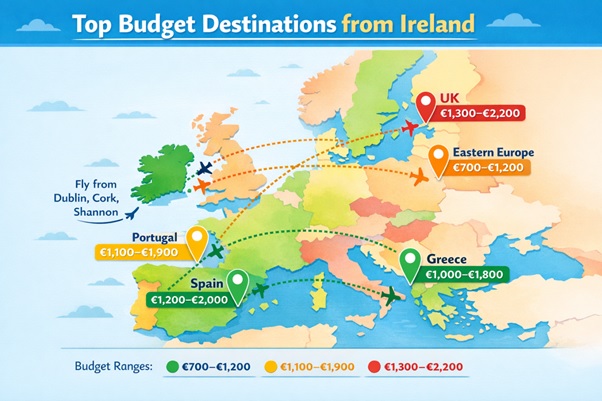
The flights between Ireland and Spain or Portugal can be even cheaper when compared to a fancy dinner for two. Both nations work under sunshine, breathtaking food, and prices lower than those in other destinations in Western Europe.
Europe is an amazing destination in Eastern Europe. Most cities, such as Prague, Budapest, and Krakow, possess beautiful architecture with a rich history at half the cost of Western cities. There you can go twice right along on your daily budget.
You do not necessarily have to fly out of Ireland to take a good break. The Wild Atlantic Way provides scenery that takes thousands of miles and money for the tourist. There are natural beauty and bustling towns with no airport stress in Kerry and Galway.
- Research average travel budget
- Find cities known for free attractions
- Consider sharing holiday homes with friends
- Visit regions with local markets for cheaper meals
4. Use Deals and Discounts
The Airlines releases its best deals in January and September. You set price alerts on flight comparison sites.
Failte Ireland regularly promotes special offers for exploring your own country. You can follow them on social media. This gives you first access to limited-time deals on local experiences and stays.
Friends and family often have unused referral codes and discount vouchers. You can ask your travel-loving mates if they have credits they can share. Many booking sites reward both the referrer and the new customer.
- Sign up for airline newsletters to catch flash sales
- Book attractions online early for better rates
- Look for packages
- Try house-sitting at your destination
- Use cashback sites when making travel bookings
5. Consider Low-Interest Borrowing Options
The direct lenders often offer better holiday loan rates. You can shop around for terms. The credit cards cost much more in the long run for holiday spending.
A planned loan usually has lower interest and fixed payments. This helps you budget without nasty surprises. You can borrow only what you can comfortably pay back within 12 months.
The CCPC website compares current loan offers from across Ireland. Their unbiased info helps find the best rates for your situation. They also explain the cost of different loan options.
- Ask if your employer offers interest-free advances
- Try credit unions for better community rates
- Focus on the APR
- Check for early repayment options
- Read all terms carefully before signing
6. Build a Mini Emergency Buffer for the Trip
A small cash cushion for travel surprises helps ahead of time. Lost bags might mean buying clothes and toiletries while waiting. The delayed flights could add extra hotel nights. These costs blow past your normal trip budget in seconds.
The health issues abroad sometimes need upfront payments. This money comes from your overall holiday budget, not your main savings. It goes right back to your regular account if you don’t use it during the trip.
- Keep some buffer money in local currency
- Store emergency cash separately
- Save local emergency numbers in your phone
- Learn your travel insurance claim steps before leaving
- Tell your bank your travel dates to prevent card blocks
Conclusion
It is safeguarding your financial future by keeping your emergency money separate from holiday plans.
You will be able to begin small with your holiday fund and see it get larger. The key to this financial peace is the presence of both money in a bank account to deal with an unexpected issue and money to enjoy a predetermined vacation. It is a balance that is good to accomplish.
The finest holidays are ones that are free of financial concern. There will be a feeling of knowing that your emergency fund is still intact back home, and this will relax you even more. This makes travelling not a financial risk, but a reward.

Caleb works as a senior content writer at Loanstopocket for the past 3 years. He is a writing enthusiast and invests a good time in exploring and writing about financial trends. His keenness in exploring a topic to create a research-based piece is simply unmatched. He believes in including a texture of authenticity with real-time examples and facts.
Caleb’s blogs and articles reveal deep-seated knowledge and expertise. His educational qualification forms the base of his excellent command over the industry and Jargon. He is a postgraduate in Finance and is currently involved in exploring the world of the stock market.